Culture
VTuber Dictionary: Operators See No Infringement
BOOTH has already lifted the temporary block and called its original decision a mistake.
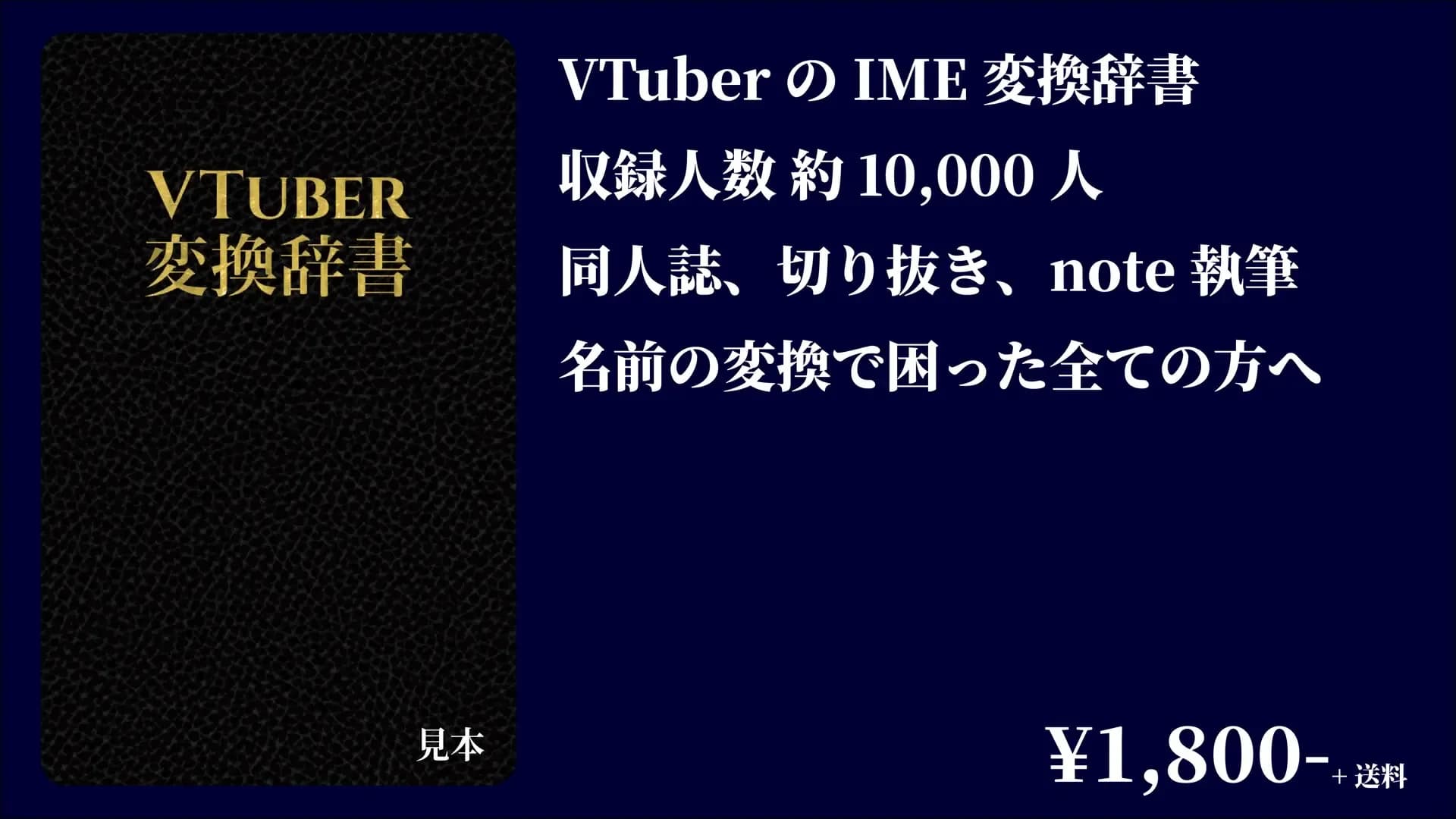
The operators of the Japanese "VTuber変換辞書" state, after a legal review, that they see no infringement in using the captured VTuber names. The doujin team Kaze to Virtual published its statement on September 17, 2026, after the paid conversion dictionary had previously drawn criticism from the VTuber scene.
As PANORA reports, the team says it had several areas of law reviewed. These include copyright and trademark law, the right to one's commercially exploitable name and image, Japan's Unfair Competition Prevention Act, and questions of personality rights, honor and data protection. On this basis, the team concludes that the dictionary does not infringe any such rights. This is the publishers' position after obtaining legal advice, not a court ruling.
BOOTH Reversed the Block
The dictionary makes it easier to enter VTuber names in Japanese input systems. According to current information, it contains around 10,000 people and 20,014 terms and is offered for 1,800 yen. Part of the criticism was directed at the fact that names appeared in a paid product without prior consent.
BOOTH had temporarily made the product unavailable to the public in early September. According to PANORA, the platform later told the operators that, after renewed review, the product content did not violate its terms of use. The original restriction was reportedly applied at short notice following several reports and was later judged to be an error. ITmedia had already reported on the quick re-release on September 7.
The debate is thus less a question of the current sales status than a dispute over legal boundaries and community norms when using VTuber names. Such questions arise in a scene where visibility and identity are closely tied to platforms. Recently, for example, a design wave around Natsuiro Matsuri showed how quickly the actions of individual talents can spread across many independent VTubers. At the same time, companies are changing their structures, for instance with the end of the Sony Music project VEE.